 how-to
How to Store Medical Records Securely: Why Every Family Needs a Connected Emergency Plan
By Danielle Marten and Tami Wood | Co-Founders, reUNITEme™
Updated October 29, 2026
Your Family's Medical Information Is Important. But Can the Right Person Access It When It Matters Most?
Imagine your child is injured while visiting relatives in another state. Your aging parent becomes confused while shopping. Your spouse experiences a medical emergency while traveling for work.
In each situation, someone may need answers immediately.
What medications do they take? Do they have allergies? Who should be contacted? Are there medical conditions that could affect treatment? Who has permission to make decisions?
Now imagine those answers are scattered across a filing cabinet, several healthcare portals, a phone, and documents that only one family member knows how to access.
The problem isn't necessarily that the information doesn't exist. It's that the information isn't connected to the people who need it.
Securely storing medical records is an essential part of family preparedness. But storage alone isn't enough.
Families need a way to organize important information, protect their privacy, identify who is authorized to access it, and connect that information to the right people when an unexpected situation occurs.
That's where reUNITEme™ brings everything together.
1. Why Secure Medical Records Matter Before an Emergency
The best time to organize your family's medical information is before anyone needs it.
When an emergency happens, families may be separated by distance, communication barriers, or circumstances beyond their control.
A grandparent may be caring for a child while the parents are unavailable. A college student may be hundreds of miles from home. An older adult experiencing confusion may be unable to explain their medical history.
Traditional medical record storage focuses on keeping documents safe. That's important, but a secure document is only useful if an appropriate person can access the necessary information.
Families should be able to answer three questions:
- Is the information accurate and up to date?
- Is it protected from unauthorized access?
- Can the right person obtain it when it's needed?
reUNITEme was designed around all three questions.
Rather than treating medical information as isolated paperwork, reUNITEme helps individuals and families build secure, person-centered profiles that can include medical details, emergency contacts, important documents, caregiver information, and other essential personal information.
The individual or family maintains the information, helping make it available for appropriate use across different situations and participating organizations.
2. How to Organize Medical Records for Every Family Member
A practical family medical information system should include essential information for each person.
Medical information to organize
- Full legal name and date of birth
- Medical conditions and diagnoses
- Current medications and dosages
- Allergies and known reactions
- Primary care providers and specialists
- Insurance information
- Emergency medical instructions
- Important medical documents
Personal and caregiver information
Medical information is only part of the picture.
Families should also organize emergency contacts, authorized caregivers, custody and consent information, language preferences, and other details that could affect how someone receives assistance.
For example, knowing that a child has a severe allergy is critical. Knowing which adult is authorized to receive information or make decisions for that child may be equally important.
For older adults, knowing their medical conditions matters. So does knowing whom to contact when they are confused or unable to communicate.
How reUNITEme connects this information
reUNITEme allows families to maintain individualized profiles rather than depending entirely on information scattered across separate healthcare systems.
These profiles help connect medical, personal, and caregiver information with the individual's emergency contact network.
When participating authorized professionals need to identify or assist someone, reUNITEme can support access to appropriate information and communication with designated contacts.
The goal is simple: One person-centered source of information, maintained by the individual or family, that can support multiple situations and authorized organizations.

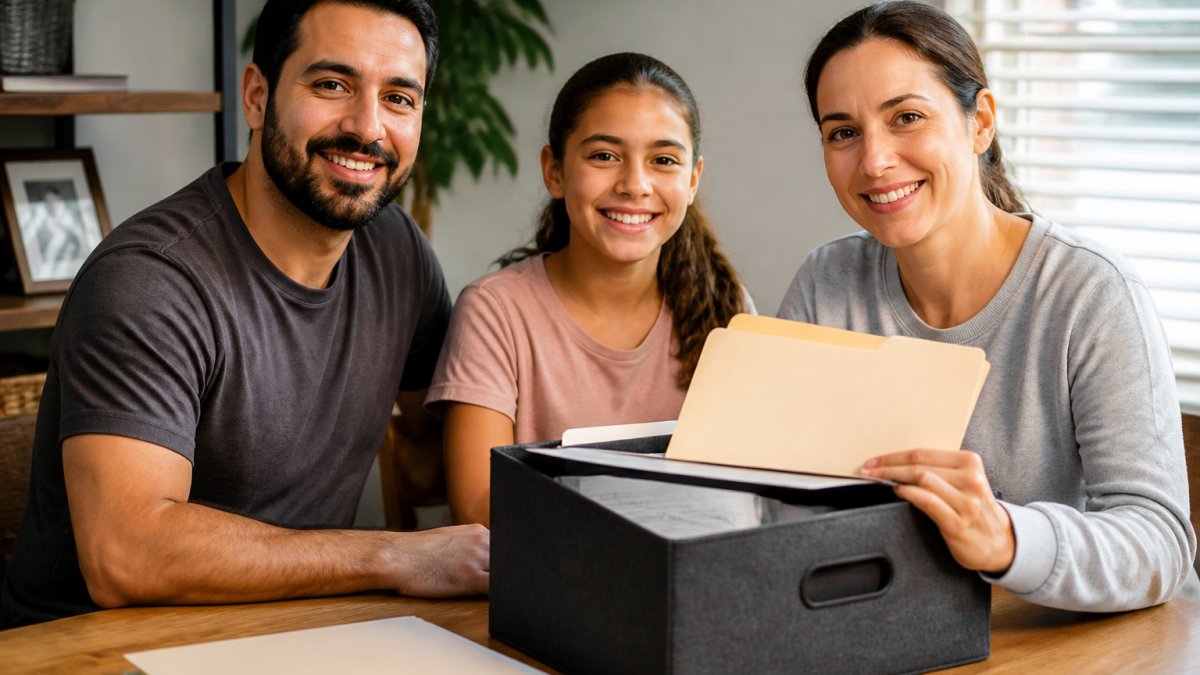
A parent and adult child sitting at a kitchen table assembling a three-ring binder with labeled dividers, medical papers spread out beside them, warm natural light
3 Do Families Still Need a Paper Medical Binder?
Yes. Paper records can remain an important part of a preparedness plan.
Power outages, damaged phones, and interruptions in internet service can affect access to digital information.
A basic family medical binder should include medication lists, allergies, insurance information, provider contacts, emergency contacts, and essential legal or caregiver documentation.
Keep the binder in a secure location known to the appropriate household members. Review it periodically and update it whenever important information changes.
However, a binder has limitations.
It cannot automatically travel with a family member. It cannot notify someone that a loved one has been identified. It cannot instantly connect participating organizations working in different locations.
And if an emergency occurs away from home, the binder may be hundreds or thousands of miles away.
The strongest approach combines secure physical backups with an accessible, privacy-conscious digital preparedness system.
reUNITEme complements traditional preparedness tools by helping families maintain essential information in a mobile, person-centered platform.
4. Digital Medical Records: Security, Encryption, and HIPAA Compliance
When storing sensitive health information digitally, privacy and security must be priorities.
Families should understand the protections used by any platform holding their personal information.
What is encryption?
Encryption helps protect information by making it unreadable without the appropriate means of access.
Two important forms include:
Encryption in transit: Protects information while it travels between devices and servers.
Encryption at rest: Protects stored information on servers or other storage systems.
Other important safeguards include access controls, secure authentication, account management, and procedures for handling sensitive information.
How reUNITEme approaches medical information security
reUNITEme is built with privacy and security as foundational priorities.
The platform uses encrypted cloud storage and controlled access to help protect sensitive personal and medical information.
reUNITEme is designed to support HIPAA-compliant handling of protected health information when HIPAA applies, including appropriate safeguards for authorized access and disclosure.
HIPAA compliance is not simply a feature or a certificate. It involves administrative, technical, and physical safeguards, along with applicable agreements, policies, and operational practices.
Importantly, not every family-maintained health record or consumer application is automatically subject to HIPAA. The applicable requirements depend on the organization, the information, and how the platform is being used.
For families, the important takeaway is that medical information should be protected while remaining available through appropriate, authorized processes.
Privacy and accessibility should work together, not compete against each other.
5. Emergency Medical Information Should Be Ready Before It's Needed
An emergency medical information sheet is one of the most useful documents a family can prepare.
It should summarize the details that could affect an immediate response:
- Identity and date of birth
- Allergies
- Current medications
- Major medical conditions
- Emergency contacts
- Communication or language needs
- Relevant caregiver or consent information
This information should be updated whenever medications, diagnoses, contacts, or caregiving arrangements change.
But even a perfectly prepared emergency sheet has one major weakness.
Someone must know where it is and how to retrieve it.
Consider a person who is unconscious following an accident. They may be unable to unlock their phone, provide a password, or tell responders whom to call.
Or consider a child who becomes separated from a caregiver at a large event. The child may be too young, frightened, or unable to communicate the information needed to reunite with family.
How reUNITEme helps bridge that gap
reUNITEme includes an identification capability that allows authorized professionals to use facial scanning as part of the process of identifying a participating individual.
When an appropriate match and authorized workflow are established, the platform can help connect that individual to their emergency contact network.
It also supports direct in-app communication with emergency contacts, reducing reliance on repeated telephone calls or fragmented messages.
For children, access is restricted to authorized individuals, providing an additional layer of protection for sensitive personal information.
This helps shift the focus from simply locating a record to connecting the person, their information, and the people responsible for helping them.
6. Protecting Children, Older Adults, and Vulnerable Family Members
Not every person can communicate their needs during an emergency.
Young children may not know their parents' phone numbers. An older adult experiencing confusion may not remember an address. Someone with a disability or communication barrier may have difficulty explaining what assistance they need.
These situations highlight why emergency preparedness must extend beyond traditional medical documentation.
Children and authorized access
For children, privacy and appropriate access are especially important.
A system designed for family preparedness should account for who is authorized to access a child's information, who should be contacted, and what caregiver or custody arrangements may apply.
reUNITEme helps families maintain this information while limiting access through authorized processes.
The goal is to support identification and reunification without making children's sensitive information publicly available.
Older adults and caregivers
For older adults, preparedness may involve several people: adult children, spouses, caregivers, healthcare professionals, and emergency responders.
These individuals may not live in the same city or even the same country.
reUNITEme helps connect important information with designated contacts, supporting continuity as a person moves between locations and care situations.
This is particularly valuable for the sandwich generation—adults who may be simultaneously supporting aging parents, raising children, and managing their own responsibilities.
You cannot be physically present for every person you love, every minute of every day. But you can help prepare the information and connections they may need when you're not there.
7. From Disconnected Records to a Unified, Person-Centered Response
One of the greatest challenges during emergencies is fragmented information.
A hospital may collect one set of details. An emergency management agency may collect another. A reunification center may begin its own paperwork. A caregiver may repeat the same information multiple times.
Each organization is trying to help, but disconnected processes can create duplication, delays, and confusion.
What if the information could follow the person?
reUNITEme is designed to support a different approach.
Instead of requiring individuals and families to repeatedly rebuild their information for every participating organization, reUNITEme provides a person-centered platform that can be used across authorized agencies and locations.
When multiple organizations participate in reUNITEme, they can work from appropriate shared, individual-maintained information according to their permissions and authorized roles.
This can help support:
- Better communication between participating organizations
- Reduced duplication of information collection
- More consistent access to current personal details
- Improved coordination with emergency contacts
- More efficient identification and reunification workflows
- A more unified, person-centered response
This approach does not replace incident command systems, emergency management procedures, or healthcare decision-making.
Instead, reUNITEme is intended to complement those systems by improving the flow of appropriate information and communication around the individual.
The person should remain at the center of the response—not the paperwork, the agency, or the technology.
8. Breaking Down Language Barriers During Emergencies
Medical and personal information is only useful when people can understand it.
During an emergency, a language barrier can complicate communication between individuals, caregivers, emergency contacts, and responding organizations.
A family member may speak a different language from the person providing assistance. An emergency contact may live in another country. Important information may need to be communicated quickly and clearly.
reUNITEme supports multilingual communication and translation capabilities intended to help participating individuals and organizations communicate across language differences.
This is especially important for families who travel internationally, live in multilingual households, or have emergency contacts in different countries.
Translation technology can support communication, although critical medical decisions may still require qualified interpretation and professional verification.
The objective is to make important information more understandable and accessible without requiring every person involved to speak the same language.
9. How to Keep Your Family's Medical Information Current
Even the most secure information system loses value when its contents become outdated.
A practical update schedule includes:
Whenever something changes: Update medications, allergies, medical conditions, emergency contacts, custody arrangements, or caregiver permissions.
Monthly: Add important new documents and review significant changes.
Every six months: Confirm medical providers, contact information, and access permissions.
Annually: Review the overall family preparedness plan and remove information or access that is no longer appropriate.
For paper records, securely shred documents that are no longer needed and that do not have to be retained.
For digital records, follow applicable retention requirements and use appropriate deletion procedures.
The reUNITEme advantage
Because reUNITEme is designed around information maintained by the individual or family, it supports a more continuous approach to preparedness.
Rather than preparing a one-time emergency packet and forgetting about it, families can incorporate updates into their everyday lives.
A new medication, a different caregiver, a child leaving for college, or a parent moving into assisted living can all prompt a profile review.
Preparedness should grow and change with your family.
10. Preparedness Isn't Just for Disasters. It's for Everyday Life.
When people think about emergency preparedness, they often imagine hurricanes, wildfires, mass-casualty incidents, or other major disasters.
But some of the most important situations happen during ordinary daily activities.
A child gets separated from family at a sporting event.
An older adult becomes disoriented while traveling.
A college student experiences a medical emergency away from home.
A parent is unexpectedly hospitalized while someone else is caring for their children.
A family member is injured while attending a concert or community festival.
In each situation, the challenge may be the same: identifying the person, understanding their needs, and connecting with someone who can help.
reUNITEme is designed to support these everyday circumstances as well as larger emergency response and family reunification efforts.
It is not simply about preparing for the worst day of someone's life.
It is about making everyday life safer, more connected, and more manageable for the people who depend on one another.
Your Family's Information Should Be as Connected as Your Family Is
Medical records matter. Privacy matters. Emergency contacts matter. Identification, caregiver permissions, and clear communication matter.
But these pieces are most powerful when they work together.
A secure binder can protect a document. An encrypted folder can store a file. A healthcare portal can provide access to clinical records.
reUNITEme helps connect the person behind those records to the information, people, and authorized organizations that may be needed when life takes an unexpected turn.
Whether you're raising children, supporting aging parents, caring for someone with additional needs, or simply preparing for the unexpected, the time to build those connections is now.
Because when something happens to someone you love, the most important question shouldn't be, "Where is their information?"
It should be, "How can we help them—and who needs to know?"
reUNITEme™ — Build it once. Grow it for life.
Learn more about reUNITEme and download the app
Frequently Asked Questions
What is the safest way to store family medical records?
A combination of secure digital storage, controlled access, and appropriately protected paper backups is a practical approach. Use encryption, strong authentication, and regular updates. For families who also need emergency contacts, caregiver details, and identification support, a purpose-built platform such as reUNITEme can help connect these elements.
Is reUNITEme HIPAA compliant?
reUNITEme is designed to support HIPAA-compliant handling of protected health information where HIPAA applies. Its use of encryption and access controls contributes to that objective. Compliance also depends on applicable policies, agreements, administrative safeguards, and how an organization deploys and uses the platform.
Can different organizations access the same person's information?
Participating organizations can use reUNITEme to access appropriate person-centered information within their authorized permissions. This is intended to reduce unnecessary duplication and improve coordination while protecting sensitive information.
Can reUNITEme help when a family member is traveling internationally?
reUNITEme is designed for international use and includes multilingual communication capabilities. Availability and specific functionality may depend on location, connectivity, applicable laws, and participating organizations.
Does reUNITEme replace a hospital's electronic medical record system?
No. reUNITEme is not intended to replace clinical electronic health records, healthcare providers, or established emergency response systems. It complements existing processes by helping individuals maintain important personal information and connect it with authorized people and organizations.
How often should I update my family's medical information?
Update essential information whenever a significant change occurs, particularly medications, allergies, diagnoses, emergency contacts, and caregiving arrangements. Review the complete profile periodically to confirm its accuracy.